November 4, 2026
Choreographer Alonzo King on motion, sound, and expression
Corinna da Fonseca-Wollheim
One of Alonzo King’s earliest memories is of his mother preparing to go out one evening. She was wearing a dress made of a fabric that whispered at every step, and as its chiffony rustle blended with the sweetness of her voice, he experienced her presence as both motion and sound. “They’re really the same,” he said in a video interview from his San Francisco home, “because you can’t make sound without some kind of movement.”
King is one of the most innovative choreographers in America, dedicated to dance as a form of spiritual inquiry that fuses sound and movement with love. In a workshop that has garnered tens of thousands of views online, he once defined ballet as “a system of law and order that has to do with kindness, benevolence and symmetry.”
Story continues below...
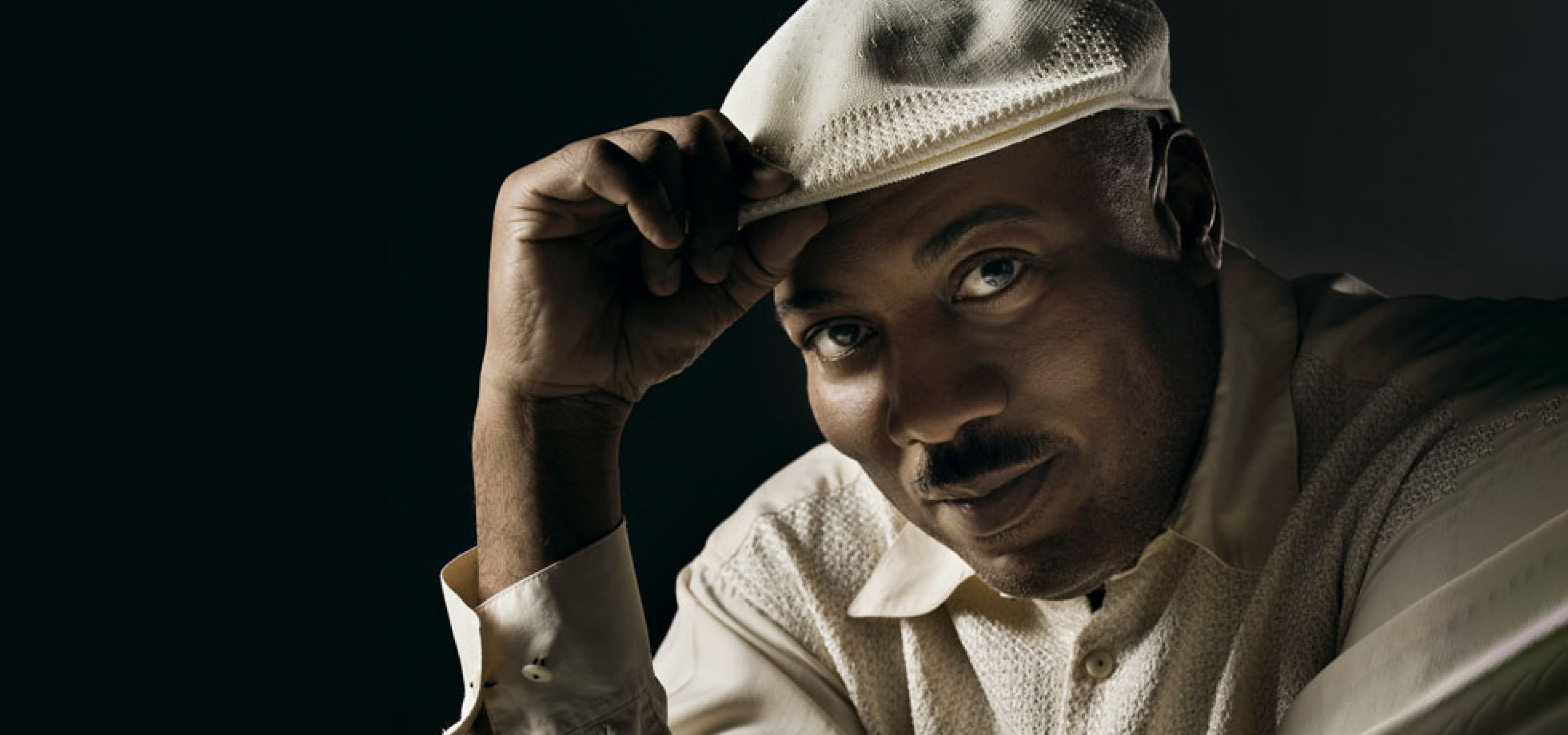
This month, dancers from the Alonzo King LINES Ballet will join the San Francisco Symphony for a new staging of Copland’s Appalachian Spring and Debussy’s Prelude to the Afternoon of a Faun, their fifth project together since 2020. In previous collaborations, King has reached far afield to work with Shaolin monks, Baka hunter-gatherers from the Congo Basin, or with the tabla virtuoso Zakir Hussain for a Scheherazade that reimagined Rimsky-Korsakov’s tunes on Persian instruments.
King’s work often reflects his ongoing efforts to integrate East and West, which he says are complimentary qualities inherent in every human. “That’s the beauty,” he said. “It’s in us. It’s left brain, right brain. It’s logic and feeling.” The power of dance, for him, lies in its ability to bring out the inherent wisdom of the human body. Alignment is not just an aesthetic goal or muscular challenge. It models balance in a world that teeters between unhealthy extremes.
“We know that on the lowest level, logic can be humdrum, predictable, stuck,” King said. “On the lowest level, feeling can be indulgent, illegible—you know: muck.”
King’s engagement with Indian philosophy goes back to his childhood in Georgia. His parents were Civil Rights activists, his father a leader of the Albany Movement and a committed disciple of Gandhi’s principles of nonviolent protest. King remembers visits from Martin Luther King and Malcolm X, as well as from friends from Ethiopia, Ghana, and Senegal who brought with them their own music that blended with the recordings of Bach, Beethoven, and Wagner, which his parents, who had met in the choir at Fisk University, loved to play. In church, he sang in the choir, feeling himself drawn to “all the beautiful chorales that had that Gregorian chant in them, which actually spoke of the East as its origin and how deep and profound that was.”
One room in the home was dedicated to yoga, which King’s father practiced. He would invite the children to observe, quietly, for five minutes at a time. With his brother and sister, King said, he would “go in and imitate lotus posture, and we’d look at each other and giggle and try to be quiet. And then after what we perceived to be five minutes, we would tiptoe out.” He said these early encounters planted the seed for his own lifelong engagement with meditation and spiritual study. “As contradictory as it may seem for someone who grew up a mover,” King said, “stillness is the doorway to peace. A body that’s not flinching, a body that you don’t scratch when you feel an itch, a mind that isn’t restless—that’s the door to the Divine.”
In King’s choreographies, every movement is metaphor. When rehearsing with dancers, he speaks of arms as antennae that receive and give information and of the heart as a sun that should radiate warmth. Extensions might speak of the human yearning for eternity; a spiral might be the head chasing the tail. Ballet, he once said, is a treatise on how to lead a complicated life.
For his company, he hires dancers as much based on character as on their athleticism. A signature of his style is an uncanny quality of simultaneous fluidity and calm, with limbs that seem to unfold like a natural process, with inevitability and ease. Lines morph into waves as arms stretch and undulate.
“They really begin to see it as an instrument,” King said of his dancers’ relationship to their bodies. “They begin to work it as a violin, as a piano, as a harpsichord. It’s music. And what’s really playing that instrument is the mind and the heart. And as you’re playing, whether it’s choreography or as a composer, you’re trying to find the essence of the communication, the ideas that are behind the music or the choreography. And you want them to inhabit you so that they’re clear.”
In a work like Appalachian Spring, King’s choreography is not so much about telling stories, as it is about teasing out what he sees as the work’s underlying metaphysical truths. And, as always, the key lies in the symbolism of the body itself.
As an example, he cites the princess in Sleeping Beauty, from Ravel’s Mother Goose, which he choreographed with the San Francisco Symphony in 2024. “What is that if it’s not all of us who are walking around in some state of unconsciousness? And we’re awakened by the magic wand—which is the spine, which means willpower—into a larger consciousness.”
Corinna da Fonseca-Wollheim is a writer and founder of Beginner’s Ear.
Alonzo King LINES Ballet performs music by Copland and Debussy with the SF Symphony and conductor James Gaffigan, November 19–21.