September 1, 2026
Alexander Barantschik celebrates 25 years with the SF Symphony
by Steve Holt
Alexander Barantschik on celebrating 25 years with the San Francisco Symphony, what it means to be a concertmaster, and creating musical miracles every performance.
Over a quarter century in the San Francisco Symphony concertmaster’s chair, has the job changed very much?
Alexander Barantschik laughs. “It changes from concert to concert!”
The basics of the job are still very much the same as they were in 2001, when he came to San Francisco. There’s a great deal the audience never sees: going over the music, editing the bowings if necessary, especially if the piece is new (and the SF Symphony performs its share of new music). Onstage, the concertmaster plays the orchestral violin solos, frequently some of the most well-known and well-loved parts of the classical repertoire.
But Barantschik, known familiarly as Sasha, says his most important task is “to be a bridge from the conductor to the orchestra.” And that’s where the constant changes come in.
“Every conductor has his or her own tempi and wishes. So for us in the orchestra, flexibility is the key. We constantly need to adjust to the reality that not only is every conductor different, every conductor is different every night. Yes, we always sound like the San Francisco Symphony, but looking and listening, and constantly being on alert is the task of every musician in the orchestra, especially the concertmaster and the other section principal players.”
Story continues below...
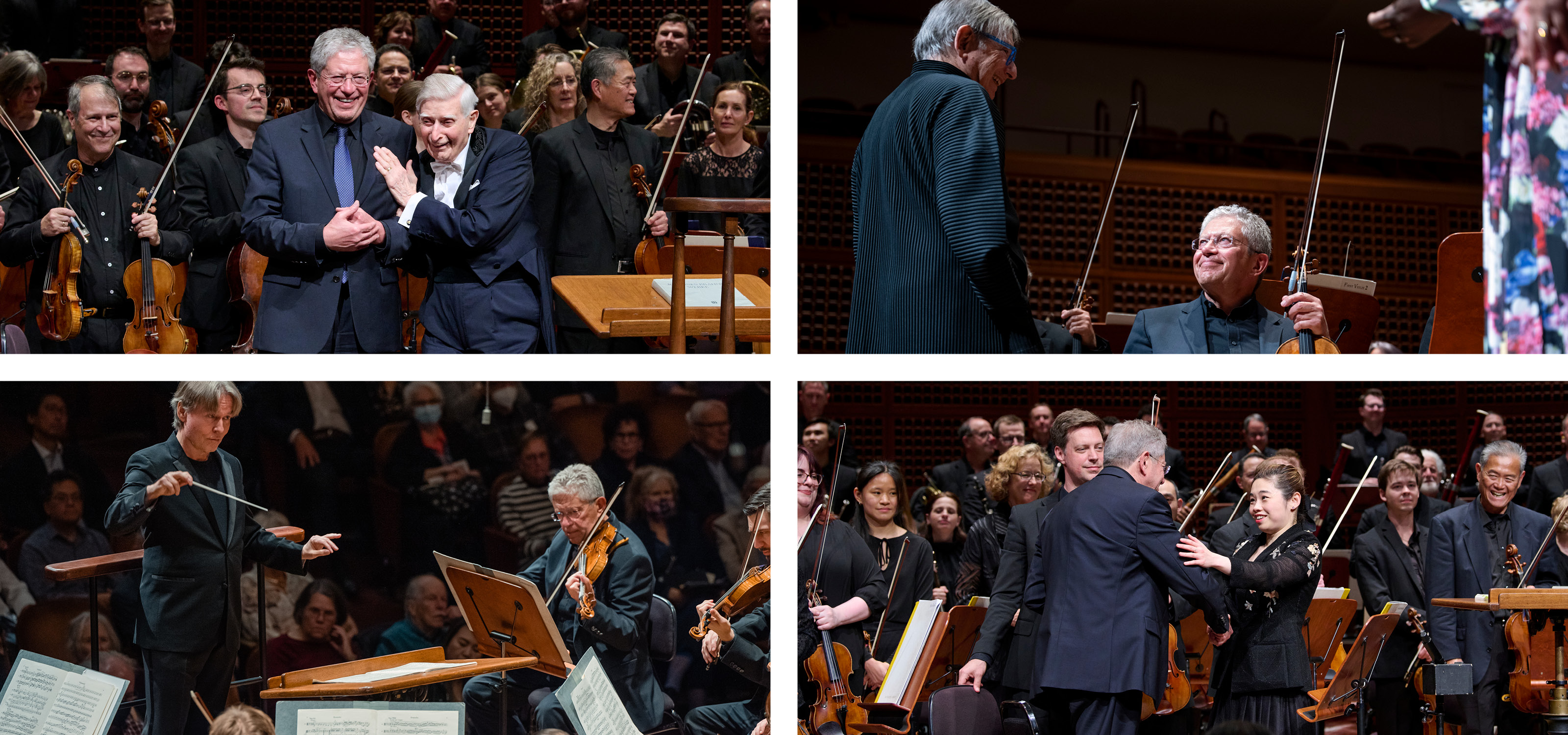
Barantschik says this level of focus is required even in repertoire standards like Beethoven’s Ninth Symphony, which the Symphony performed last June. “It’s one of the most complex pieces in the repertoire. There’s a big orchestra, a large chorus, and four soloists. You could almost say the concertmaster’s task is to read the minds of the conductor and the singers, and help communicate their needs to the players.”
He relishes the excitement and variability of live performance. “The audience is witnessing the creation of music, all the way from silence into emotions. It’s a pretty fascinating process. Musicians read those little black dots on the page as someone on the podium waves their hands, and the result is a deep range of emotions the listener feels. Isn't that a miracle? I think it is.”
Another miracle is the one Sasha tucks under his chin for every performance: a 1742 Guarneri del Gesù violin, graciously on loan from the Fine Arts Museums of San Francisco.
“It is a blessing, a great privilege, and a great honor to play this violin, which at one time belonged to the legendary Jascha Heifetz. Before that, it was played in the premiere of the Mendelssohn Violin Concerto. The story goes that Heifetz owned two priceless instruments, this one, and a Stradivarius. An interviewer asked him why he preferred to perform with the Guarneri, and he said, ‘I get better reviews with it.’ I don’t know if that’s true, but it’s a good story!”
Barantschik’s story began in Leningrad (now St. Petersburg), where he attended the conservatory and performed with the symphony. After immigrating to the West, he became concertmaster with the Bamberg Symphony, the Netherlands Radio Philharmonic, and then the London Symphony Orchestra.
That was where he met Michael Tilson Thomas for the first time, beginning a long musical journey together. Tilson Thomas had just been named principal conductor of the LSO and the orchestra was set to record Strauss’s Ein Heldenleben. “We actually met in a recording studio. It was in the middle of a very cold season in London, and we both were wearing very warm, completely identical Irish cardigans. We looked at each other and said, ‘That’s a good start!’ It was a good start indeed. And the rest is history, of course.”
Tilson Thomas made his way to San Francisco and within a few years had brought on Barantschik as concertmaster. The two were close collaborators throughout MTT’s 25 years at the helm. “There are countless, unforgettable concerts with him that live vividly in my memory,” Barantschik says. “I cherish those memories.”
In addition to MTT, Barantschik has performed with many of the other giants of the podium, from Leonard Bernstein to Georg Solti, Claudio Abbado to Seiji Ozawa, and Colin Davis to Herbert Blomstedt.
He is eager to work with the Symphony’s recently appointed music director, Elim Chan. “There is a lot of interest, curiosity, and enthusiasm about her appointment. She recently led us in La Mer by Debussy, and it was nothing short of phenomenal. Even before she started conducting, when she just came on stage, the whole atmosphere was electric!”
In addition to Chan’s concerts in October, Barantschik is also looking forward to an April 2027 program led by former SF Symphony Music Director Esa-Pekka Salonen featuring Berlioz’s Symphonie fantastique, which he calls “one of my favorite pieces.”
While acknowledging the challenges facing orchestras post-pandemic, Sasha is bullish on the future. “Things go up and down in culture, but after these difficult years, I feel a genuine interest in classical music in the Bay Area. I see a lot of young faces in the audience every night, which is, of course, encouraging. Elim is planning a very well-balanced combination of old, beautiful pieces that everyone knows, and new music. I know she is very capable of doing both.”
He’s also encouraged by the changing face of the Orchestra. “Recently, many players have decided to retire but we’ve been able to attract major talents from around the world. All the young people that we’ve hired are really incredible. The orchestra is in phenomenal shape. So Elim Chan is getting a perfect instrument. It’s like giving a violinist a Guarneri del Gesù: in a pair of skillful hands, the sky is the limit!”