January 1, 2026
Sarn Oliver, First Violin
Joined the SF Symphony 1995
Joined the SF Symphony 1995
What was your first concert with the San Francisco Symphony?
I was actually a substitute on a European tour with Herbert Blomstedt—I remember we went to Frankfurt. It was interesting being on tour with 100 people, most of whom I didn’t know.
How did you begin playing violin?
My dad was a composer, and my mom was a pianist. He had this idea that I should be Mozart—so I played violin and piano at first. I was born in Connecticut while my father was getting his master’s degree at Yale, and then we moved to Princeton, where he got his doctorate with the composer Milton Babbitt. Later we lived in North Carolina, Long Island, Dallas, and Upstate New York, while he taught at different universities.
Story continues below...
What were your next steps in becoming a musician?
I started winning violin competitions in Dallas and playing with different orchestras. I finished high school by correspondence course and began college at Juilliard when I was 15, earning a bachelor’s and master’s degree there. I studied with Sally Thomas, Ivan Galamian, and Felix Galimir.
How did you come to San Francisco?
I played in a piano trio with Peter Wyrick, who had just won a job with the San Francisco Symphony [Wyrick joined the SF Symphony in 1986 and retired as Associate Principal Cello in 2023]. I had been in New York for so many years that I really wanted to get out of town, and thought maybe I’d also go to California. I was offered principal second violin of the Sacramento Symphony. After that orchestra folded, the SF Symphony offered me a one-year contract, which became my entry here. I was also previously concertmaster of the Santa Cruz Symphony.
Do you have a practice routine?
I really love to practice and try to spend five hours a day on it, even if I’m going to the Symphony and working. I’m weird in that way. I’m always learning different pieces and working on certain technical things. When I was 20, I thought I knew everything, but I’ve spent the next 40 years realizing I’m still learning.
What kind of violin do you play?
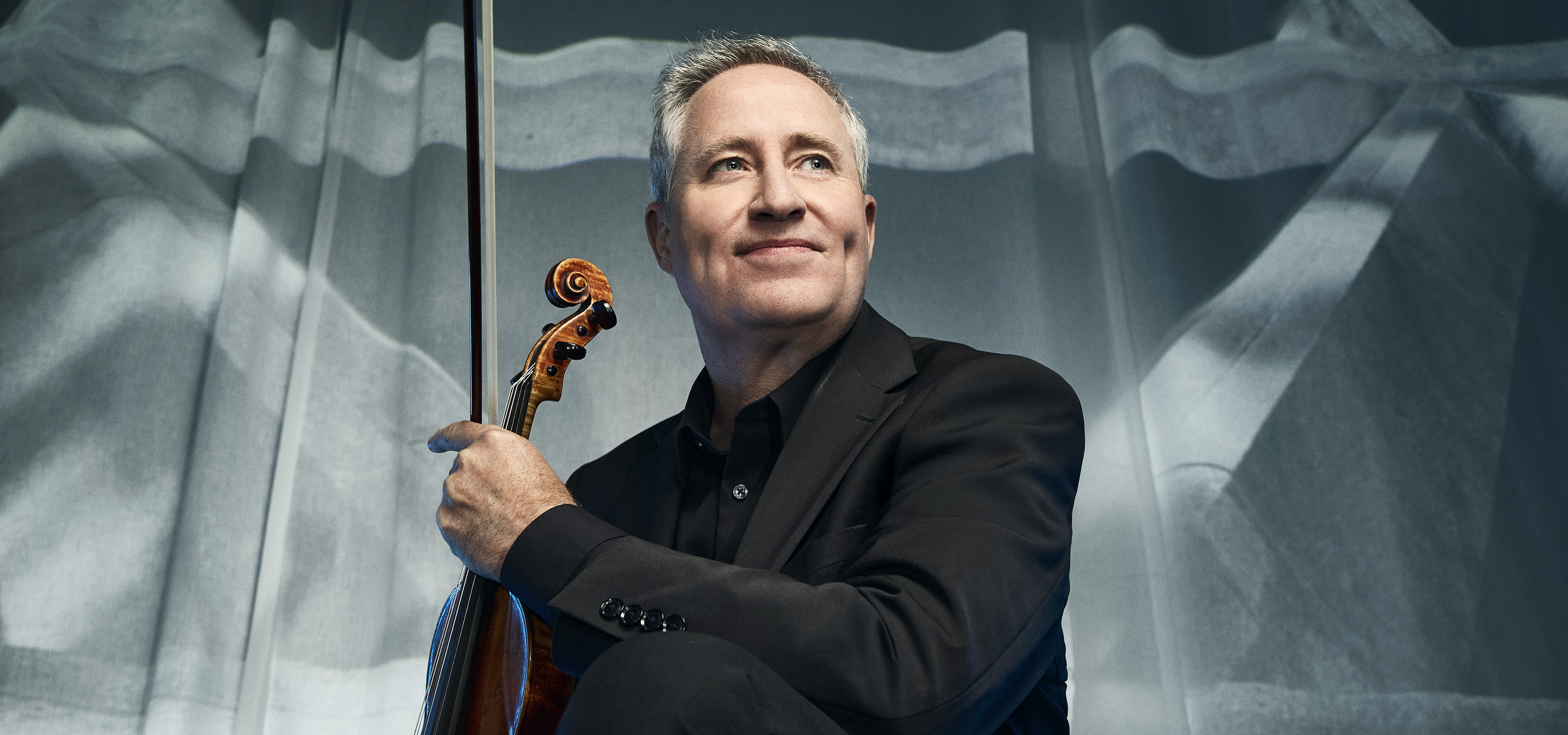
I love violins, and when I was a kid, I didn’t have one—I borrowed instruments. Juilliard loaned me a Strad, someone lent me a Guarneri del Gesù for a little while, so I didn’t own a violin until my late 20s. If I didn’t like how a violin sounded, I would adjust it, which got me interested in how violins work. When I was young and poor, I’d buy a violin in a pawn shop for $100 and try to make it sound better. Now I collect violins and even learned to make and repair them myself. I have maybe 35 violins, 80 bows, and I’m always buying and selling. It’s turned into a business helping colleagues who are looking for a good violin or bow.
So which of your 35 violins do you actually use at the Symphony?
Well, I don’t like my violins to feel lonely, so I often bring more than one and sometimes play two or three in a day. I have some fantastic modern instruments that have been made for me, and for a while I was collecting what we call “copyists,” the best forgeries in the world of a Strad or del Gesù.
What are your other creative pursuits?
I’m a composer of mostly chamber music, but have been branching out into bigger things [Oliver’s Cat Quartet was performed in a June SF Symphony chamber music concert]. I’m also a painter, and have been doing very large paintings that I compose pieces to, so someone can see the painting in a gallery and also hear the piece. I have a recording studio and am a recording engineer, too. I also still love playing chamber music.
How do you find the time for all this?
No comment.