September 1, 2026
Joshua Elmore
Principal Bassoon
Principal Bassoon
Joshua Elmore joined the San Francisco Symphony as Principal Bassoon in 2024. He makes his Symphony solo debut this month in the All San Francisco concert.
What was your first concert with the SF Symphony?
My trial week was in October 2024 with Esa-Pekka Salonen. We played Shostakovich’s Violin Concerto No. 1 with Sayaka Shoji [now available as a live recording from SFS Media on Apple Music Classical] and Brahms’s Symphony No. 4 in E minor. A fun fact is that Brahms Four is a very significant piece in my musical journey. I first played it at Interlochen Arts Camp when I was a student, and later wrote my college essays about the piece because it had such a profound impact on my life and my desire to become a professional musician.
How did you begin playing bassoon?
I grew up in Shaker Heights, Ohio, and started playing piano at the age of eight, recorder in fourth grade, and then violin in fifth grade. After a year of violin, I realized it wasn’t for me, so I switched to the concert band to play clarinet—and did that for about three weeks. I found myself curious about the other instruments in the band and wanted more of a challenge, so I asked the band director if I could play another wind instrument. We already had too many oboe players, so he suggested the bassoon.
I had no idea what it was, and at the time, the bassoon was about as tall as I was. But I saw it, thought it looked cool, and absolutely wanted to play it. Even in elementary school, I would skip recess to go to the band room and practice. From ninth grade through my final day of 12th grade, I got to school by 7:00am to practice before band started. I was addicted to making music, and I’ve been a bassoon player ever since.
Story continues below...
What were your next steps in becoming a professional musician?
I went to Juilliard, where I studied with Judith LeClair, principal bassoon of the New York Philharmonic. I later studied with Richard Beene at the Colburn School in Los Angeles during the pandemic, but won my previous job as principal bassoon of the Fort Worth Symphony during my first year there. I spent three and a half seasons as principal in Fort Worth before coming to San Francisco.
What kind of bassoon do you play?
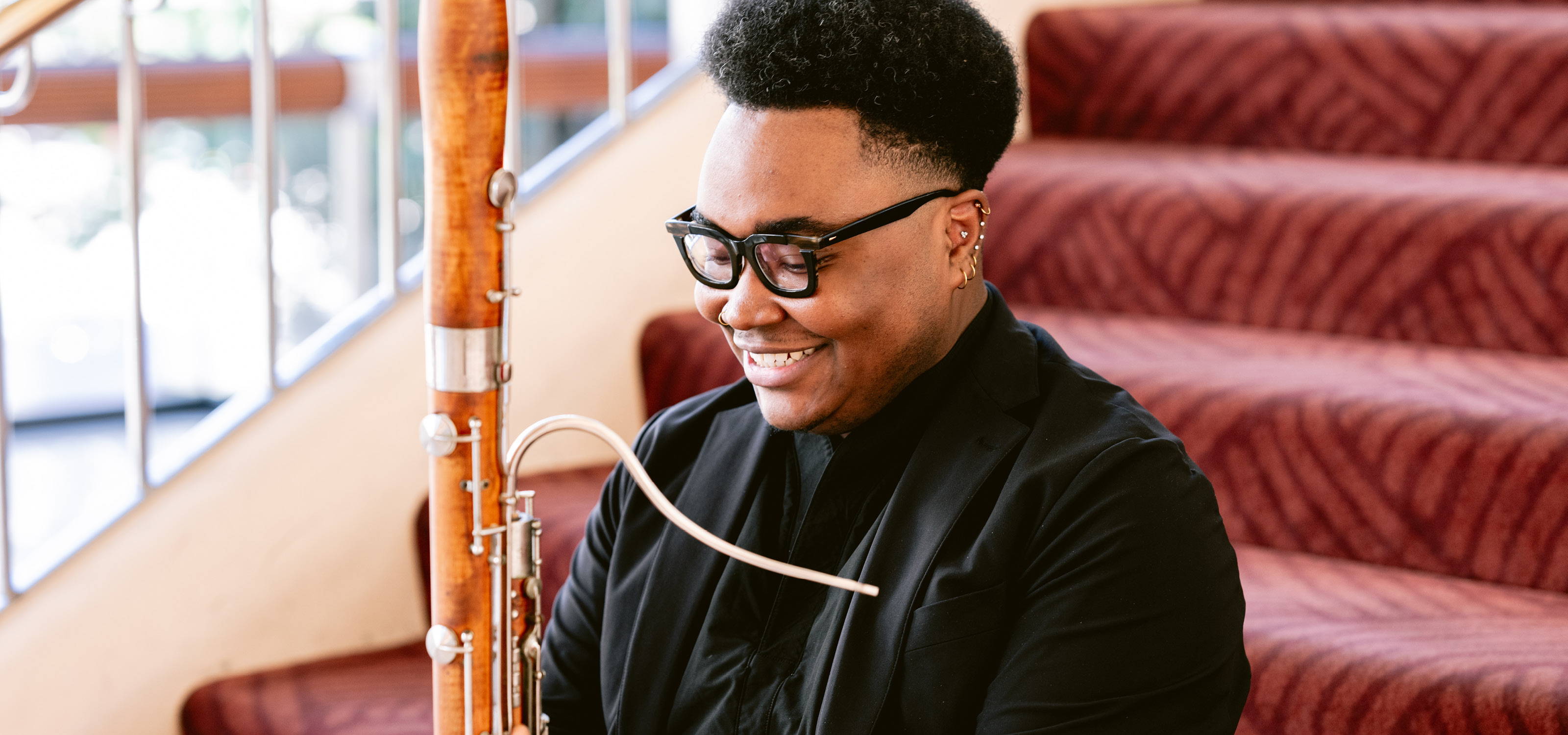
My bassoon was made in Germany in 1930 by the Heckel company. It’s made of white maple wood. I actually bought it from my high school orchestra director. Her husband had played it as a substitute with the Cleveland Orchestra and wanted to sell it. She walked out onto the football field during marching band camp my senior year to let me know it was for sale, and I’ve played it ever since.
What do you love about bassoon?
I really think my voice is the bassoon. There was a period when I was trying to learn so many different instruments, and I even played saxophone for a while. But the bassoon was the one I felt closest to and the instrument that allowed me to convey my voice most effectively.
It’s an incredibly versatile instrument in the sense that it can play so many different roles in the ensemble—as a bass instrument, a solo voice, or a countermelody. The color palette I have access to as a bassoonist is vast, and I feel that it allows my music-making to become even more personal.
What are your other musical activities?
I recently started teaching at the San Francisco Conservatory of Music and the Aspen Music Festival and School. I also perform with the Chineke! Orchestra during the summers, a majority-Black and ethnically diverse orchestra based in London. I’ve appeared with them at the BBC Proms.
What do you enjoy outside of music?
I love curating my collection of more than 60 indoor plants. I actually moved them here from Fort Worth in my car! I love nature and the outdoors in general, which is one of the reasons I love San Francisco—there’s so much green here. I also enjoy driving around SF in my Mazda Miata and taking in the beautiful city we get to call home.