January 1, 2026
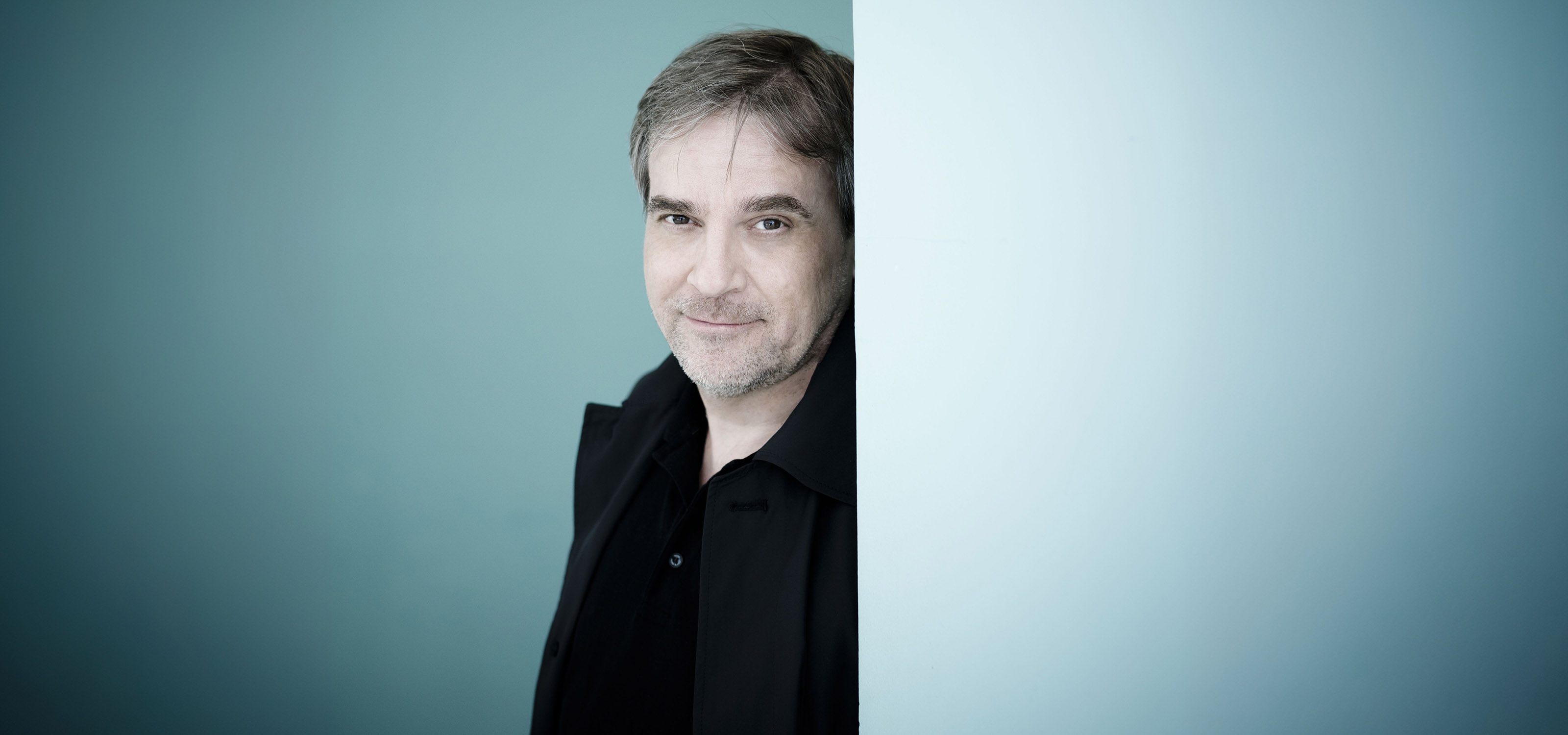
Conductor John Storgårds makes his debut with the San Francisco Symphony
by Steve Holt
When conductor John Storgårds steps onto the podium in Davies Symphony Hall, he’ll be wearing more than concert attire: His Finnish pride will be showing. In addition to his post as chief conductor of the Turku Philharmonic in the south of Finland, Storgårds has, for three decades, led the Lapland Chamber Orchestra in the far north.
Born in Helsinki, he began his musical journey as a violinist, serving as concertmaster of the Swedish Radio Symphony under Esa-Pekka Salonen, and then studying conducting under legendary Finnish conductor and teacher Jorma Panula, as well as Estonian Eri Klas. In addition to his Finnish posts, he also serves as chief conductor of the BBC Philharmonic and maintains a separate career as an in-demand violinist.
Finland will definitely be in the spotlight in Storgårds’sSan Francisco Symphony debut, as he leads the United States premiere of Outi Tarkiainen’s The Rapids of Life. Tarkiainen’s English horn concerto Milky Ways, aSan Francisco Symphony commission, was a standout in its US premiere here with Russ de Luna as soloist in 2023.
Story continues below...
Storgårds has a special relationship with Tarkiainen and her music. The first time I saw Outi she was more or less a kid. She’s from Lapland and we’d invited her to play some of her own music on the piano. At the time, I thought ‘we will hear more from this person.’ And we certainly did!" It wasn’t long afterward that Tarkiainen began moving from her initial interest in jazz to a more classical approach. Storgårds helped commission one of her first orchestral pieces for the BBC Philharmonic, Midnight Sun Variations, and conducted its world premiere at the BBC Proms. “That was an international breakthrough for her,” he says. “So I feel proud of having been part of getting her music out there and getting her known. Every season, I have something by Outi in my repertoire.”
Several key events inspired Tarkiainen’s The Rapids of Life, including the birth of her third child. “She told me that had been a very strong, expressive experience,” Storgårds recalls. The work is also dedicated to the memory of Finnish composer Kaija Saariaho, who died in 2023 when Tarkiainen was working on this piece.
“They knew each other; Kaija was a very important inspiration for Outi. There are some quotations, for example, in the beginning of the piece, for a solo cellist, from Saariaho’s cello concerto. Because the two were close, there is also a sadness that comes out in this piece.”
Storgårds describes The Rapids of Life as having “a kind of slow energy or pulsation, but it builds up very dramatically into a clear climax point. The great thing about Outi is that she can surprise us. She doesn’t repeat herself, and I think that’s a very good sign for a young composer.”
Rapids is a great contrast with Shostakovich’s Piano Concerto No. 1, also on the program. It features a small orchestra and two soloists, pianist Seong-Jin Cho and SF Symphony Principal Trumpet Mark Inouye. The piece began life as a trumpet concerto before Shostakovich settled on the concept of a piano concerto with a prominent solo trumpet part.
“This concerto has a totally different kind of sparkling energy. There’s a lot going on in it, so even a first-time listener will find it very engaging,” Storgårds says. “There are very rapid transitions from one character or mood to another; some high-speed elements, as well as more atmospheric passages. And then he does these funny quotations of things; a folk song element, or a phrase from Beethoven, which will be recognizable even for someone who’s never heard the Shostakovich.”
Rounding out the concert is Beethoven’s Fifth Symphony, which Storgårds describes as “storytelling without words, with a lot of beauty, a lot of seriousness, but also extreme happiness.”
How does a conductor keep this chestnut sounding fresh, for both audience and performers?
“For me, with pieces like this, I feel that it’s very important to get back to the score in detail, especially going over my own markings from previous performances,” Storgårds says. “Of course, over my lifetime I’ve listened to all kinds of interpretations and recordings and performances of this piece, but I don’t want to be influenced by those; in a sense, I want to keep things between the score and myself.”
“You can approach it in many different ways, but you have to work, and you have to think a lot about how to do it,” he continues. “You know that all the orchestras you do it with, all the players have heard it all their lives, and they know it. It’s very important that everybody involved has the feeling that, okay, this is a great piece of music, and we are doing it now and here. It doesn’t need to have anything to do with the history of all the performances of this great symphony.”
Storgårds chuckles when asked what the secret is to getting those famous first four notes to explode out of nowhere in perfect unison.
“First of all, you have to have good nerves to stay very clear in front of the orchestra. There should be no doubt about what you’re doing, and your tempo, and how long you hold the last of those notes, and all these important elements in the beginning of it. The essential thing is to get in contact with every musician on stage and then to feel that, okay, are we ready? Yes, we are ready. Now we go!”
Storgårds is excited about his debut with the San Francisco Symphony. “I know it’s a great orchestra with a great history, with a reputation for a wider repertoire than many other orchestras, and that’s something that I very much look forward to, especially with the program we’re doing.”
This marks his first visit to San Francisco and he looks forward to taking in the Bay Area’s natural beauty. “When I have the free time, I love to just walk around and get the atmosphere of a place. Being from Finland and living very close to nature, when I’m in a big city I always want to find parks and natural areas, so I very much hope to do that in San Francisco.”
Steve Holt is an arts reporter and Contributing Writer to the San Francisco Symphony program book.